
Gardening, Sustainable Living
Ceylon Spinach (Nela Basale): The Beautiful Wild Edible You Should Be Growing
Jun
Ceylon Spinach (Nela Basale): The Beautiful Wild Edible You Should Be Growing
Many gardeners struggle to grow traditional spinach in hot and humid climates. As temperatures rise, conventional spinach often bolts quickly, leaving gardeners searching for resilient alternatives.
This is where Ceylon Spinach shines.
Known botanically as Talinum fruticosum (formerly Talinum triangulare), this attractive leafy vegetable combines beauty, nutrition, and remarkable adaptability. Across Southern India, it is commonly known as Ceylon Spinach, while internationally it is often referred to as Waterleaf or Surinam Purslane.
What makes this plant especially interesting is that it is often overlooked despite being highly productive and easy to grow. Moreover, its succulent leaves, delicate pink flowers, and ability to thrive with minimal care make it a valuable addition to home gardens.
Before we dive deeper, it’s important to clear up a common confusion. Although both are edible greens, they differ significantly in growth habit and cultivation requirements.
Unlike Malabar Spinach, which grows as a vigorous climbing vine, Ceylon Spinach is a compact, self-supporting herbaceous perennial.
Let’s explore why this underrated wild edible deserves a place in every kitchen garden.
What is Ceylon Spinach (Nela Basale)?
Ceylon Spinach is a tropical leafy vegetable valued for its edible leaves, tender stems, ornamental flowers, and exceptional resilience.
Native to tropical regions of the Americas, it has become naturalised across Asia, Africa, and many tropical parts of India. Today, it grows abundantly in home gardens, farm boundaries, and semi-wild landscapes.
One reason Ceylon Spinach remains under-recognized is that it is known by different names in different regions. As a result, many gardeners encounter the plant without realizing it is the same nutritious leafy vegetable discussed in gardening and nutrition literature.
Furthermore, understanding these regional names helps connect traditional knowledge with modern gardening practices. Some commonly used local names include:
| Language | Local Name |
|---|---|
| Telugu | సిలోన్ బచ్చలి |
| Kannada | ನೆಲ ಬಸಳೆ |
| Tamil | குத்து பசலை |
| Malayalam | സാമ്പാർ ചീര |
| Hindi | सीलोन पालक |
| English | Ceylon Spinach / Waterleaf |
| Botanical Name | Talinum fruticosum |
Physical Appearance and Characteristics
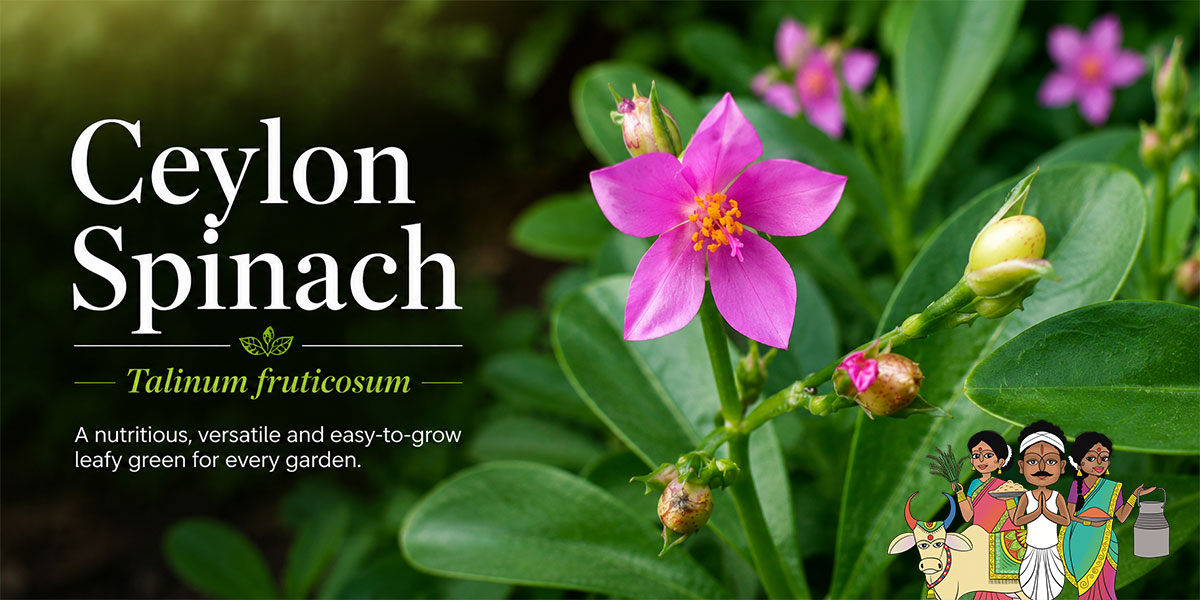
One of the first things gardeners notice about Ceylon Spinach is its unique appearance.
The plant produces:
- Smooth, fleshy succulent stems
- Thick spoon-shaped leaves
- Bright green foliage
- Small pink to light-purple flowers
- Delicate yellow stamens at the flower centre
The flowers open daily, creating a surprisingly ornamental display. In fact, many people initially grow the plant for its beauty before discovering its culinary value. Additionally, its succulent nature allows it to store water efficiently, helping it tolerate short periods of drought better than many leafy vegetables.
The Difference Between Nela Basale and Malabar Spinach
| Feature | Ceylon Spinach (Nela Basale) | Malabar Spinach |
|---|---|---|
| Botanical Name | Talinum fruticosum | Basella alba |
| Growth Habit | Upright herb | Climbing vine |
| Support Required | No | Yes |
| Stem Type | Succulent | Vine-like |
| Flowers | Small pink flowers | White or pink clusters |
| Maintenance | Very low | Moderate |
Ceylon Spinach grows as a self-supporting herb and rarely needs any support structure. Malabar Spinach, on the other hand, requires trellises or fencing to climb.
Habitat and Natural Distribution of Ceylon Spinach
Ceylon Spinach thrives naturally in warm, humid tropical and subtropical environments. Although believed to have originated in tropical regions of Central and South America, it has spread widely across Asia, Africa, and the Caribbean, where it has become an important traditional food plant. Moreover, it adapts remarkably well to diverse growing conditions.
For optimal growth, Ceylon Spinach prefers:
- Warm temperatures between 20°C and 35°C
- Moderate to high humidity
- Well-drained soil
- Partial shade to full sunlight
Unlike many leafy vegetables that demand fertile soil and frequent attention, this resilient herb can establish itself in relatively poor soils while continuing to produce abundant foliage. Consequently, it has become an important yet often overlooked edible species across tropical ecosystems.
Health and Nutritional Benefits of Nela Basale
The popularity of Ceylon Spinach is growing not only because it is easy to cultivate but also because it offers impressive nutritional value.
A Rich Source of Essential Micronutrients
Studies have identified significant concentrations of important minerals and vitamins. Consequently, the plant is increasingly attracting attention among home gardeners.
Notable nutrients include:
- Calcium
- Magnesium
- Potassium
- Iron
- Vitamin C
As a result, Ceylon Spinach is increasingly attracting attention among gardeners seeking nutrient-dense leafy vegetables for home consumption.
Reported dry-weight analyses have shown:
- Calcium: approximately 678 mg per 100 g
- Magnesium: approximately 1983 mg per 100 g
As a result, regular consumption of nutrient-rich leafy greens can contribute to overall dietary diversity and wellness.
Medicinal Properties and Bioactive Compounds
Researchers have also found that Ceylon Spinach contains beneficial plant compounds such as flavonoids, phenolic compounds, and natural antioxidants. In addition, these naturally occurring compounds contribute to the plant’s nutritional value. Furthermore, these naturally occurring compounds contribute to the plant’s growing reputation as a valuable functional food.
In traditional food systems, Nela Basale has been used as:
- A cooling food during hot weather
- A digestive-supporting vegetable
- A mild natural laxative
- A nourishing green for daily meals
While traditional uses are well documented, it is important to note that the plant should not be viewed as a replacement for professional medical treatment.
How to Grow Ceylon Spinach: Step-by-Step Cultivation Guide
One reason gardeners love this plant is its remarkable adaptability.
Climate and Soil Requirements
Unlike many leafy vegetables, it tolerates poor soils surprisingly well.
For best growth:
- Use well-draining soil
- Add compost before planting.
- Maintain moderate moisture
- Avoid prolonged waterlogging
Meanwhile, gardeners should ensure adequate drainage to prevent prolonged waterlogging around the roots.
Why Ceylon Spinach Is a Climate-Resilient Future Crop
As climate change continues to challenge conventional agriculture, researchers and sustainable farming advocates are increasingly looking toward resilient, underutilized crops that can adapt to changing environmental conditions. Ceylon Spinach is emerging as one such promising candidate.
Unlike traditional spinach varieties that often struggle in hot weather, Ceylon Spinach thrives in tropical heat and high humidity. Its succulent stems and leaves enable it to store moisture efficiently, helping the plant tolerate short dry spells better than many common leafy vegetables.
Several characteristics make it a valuable climate-smart crop:
- Tolerates heat and humidity
- Performs well in marginal soils
- Requires relatively low external inputs
- Propagates easily from cuttings
- Produces multiple harvests from a single planting
- Supports household food security
For home gardeners, this means fewer crop failures during periods of extreme weather. Similarly, small-scale farmers can diversify production while reducing dependence on resource-intensive crops. Moreover, the plant’s ability to produce repeated harvests from a single planting further improves its value in sustainable gardening systems.
As interest grows in sustainable food systems and biodiversity conservation, plants like Nela Basale demonstrate how traditional edible species can contribute to more resilient gardens and farming systems. Ultimately, the combination of nutrition, beauty, and resilience makes Nela Basale particularly relevant for future tropical gardening systems.
Propagating from Stem Cuttings (The Fastest Way)
The easiest way to grow Ceylon Spinach is through stem cuttings. Because the plant roots quickly, this method is widely preferred by home gardeners. Therefore, stem cuttings remain the preferred propagation method for most gardeners.
Follow these simple steps:
- Select a healthy, mature stem.
- Cut a 4–6-inch section.
- Remove leaves from the lower half.
- Plant directly into moist soil.
- Water lightly.
- Keep in partial shade for the first week.
Roots usually develop quickly, and vigorous growth follows shortly after establishment.
Many gardeners prefer this method because it produces harvestable plants faster than seed propagation.
Potting and Container Setup for Urban Gardens
Ceylon Spinach performs exceptionally well in containers. Therefore, it is an excellent choice for balconies, terraces, and compact urban gardens.
Suitable options include:
- Grow bags
- Clay pots
- Cement planters
- Raised beds
Recommended pot size:
- Minimum 12-inch depth
- Good drainage holes
Ideal potting mix:
- 40% garden soil
- 30% compost
- 20% cocopeat
- 10% sand
Similarly, raised beds provide excellent drainage and support vigorous growth. This combination creates the free-draining environment preferred by the plant’s succulent root system.
Traditional Culinary Uses: Cooking with Ceylon Spinach
In many coastal and Southern Indian communities, Nela Basale has long been valued as a traditional food plant.
Cleaning and Preparation Tips
The leaves are tender and moisture-rich.
For best results:
- Harvest early in the morning
- Wash gently
- Avoid excessive squeezing
- Use fresh whenever possible.
Both leaves and young stems are edible. In fact, both leaves and stems are traditionally used together in many recipes.
Classic Southern Indian Recipes
Ceylon Spinach fits naturally into traditional home cooking.
Popular preparations include:
- Kodilu– A flavorful coastal-style curry where the leaves are cooked with spices, coconut, and seasonal ingredients.
- Saaru – Tender leaves and stems are simmered with lentils to create a nourishing broth-like preparation.
- Pakoda – Chopped leaves can be incorporated into spiced fritter batter for a delicious seasonal snack.
- Stir-Fries – Quick stir-fries preserve texture while highlighting the plant’s mild flavour.
Similarly, the plant’s succulent texture contributes a pleasant softness to cooked dishes.
Why More Gardeners Are Rediscovering Ceylon Spinach
Modern gardening trends increasingly focus on:
- Climate resilience
- Food security
- Biodiversity
- Sustainable growing practices
Clearly, Ceylon Spinach checks all of these boxes. Not only is it beautiful enough for ornamental gardens, but it is also productive enough for kitchen gardens and resilient enough for changing weather patterns. Perhaps most importantly, it represents the type of underutilised traditional crop that deserves renewed attention in modern food systems.
Frequently Asked Questions
Q1: Is Ceylon Spinach a perennial or an annual plant?
Ceylon Spinach behaves as a short-lived perennial in tropical and frost-free regions. In colder climates, it is usually grown as an annual or protected during winter.
Q2: How long does it take to harvest Nela Basale after planting?
When grown from stem cuttings, harvest can often begin within 30–45 days after planting.
Q3: Does Ceylon Spinach require direct sunlight?
No. While it performs very well in full sun, it also grows successfully in partial shade, making it ideal for balconies and small urban gardens.
Q4: Can you eat the stems of the Nela Basale plant?
Yes. The tender succulent stems are completely edible and are commonly cooked together with the leaves in traditional dishes.
Q5: Is Ceylon Spinach suitable for container gardening?
Absolutely. It grows exceptionally well in pots, grow bags, and raised beds provided the soil drains well.
Conclusion
Ceylon Spinach is one of those rare plants that effortlessly combines beauty, nutrition, and practicality.
Not only do its attractive pink flowers brighten the garden, but they also add ornamental value to edible landscapes.
Whether you know it as Ceylon Spinach, Nela Basale, Waterleaf, or Talinum fruticosum, this resilient wild edible deserves far more recognition than it currently receives. Therefore, gardeners looking for a resilient and productive leafy green should seriously consider growing this underutilised plant.
Ultimately, if you’re looking for a productive, climate-friendly leafy green that grows where many others struggle, Ceylon Spinach may become one of the most rewarding plants in your garden.