
Nature Decoded
The Science of Petrichor: Why Does the Earth Smell So Good After the First Rain?
Jul
The Science of Petrichor: Why Does the Earth Smell So Good After the First Rain?
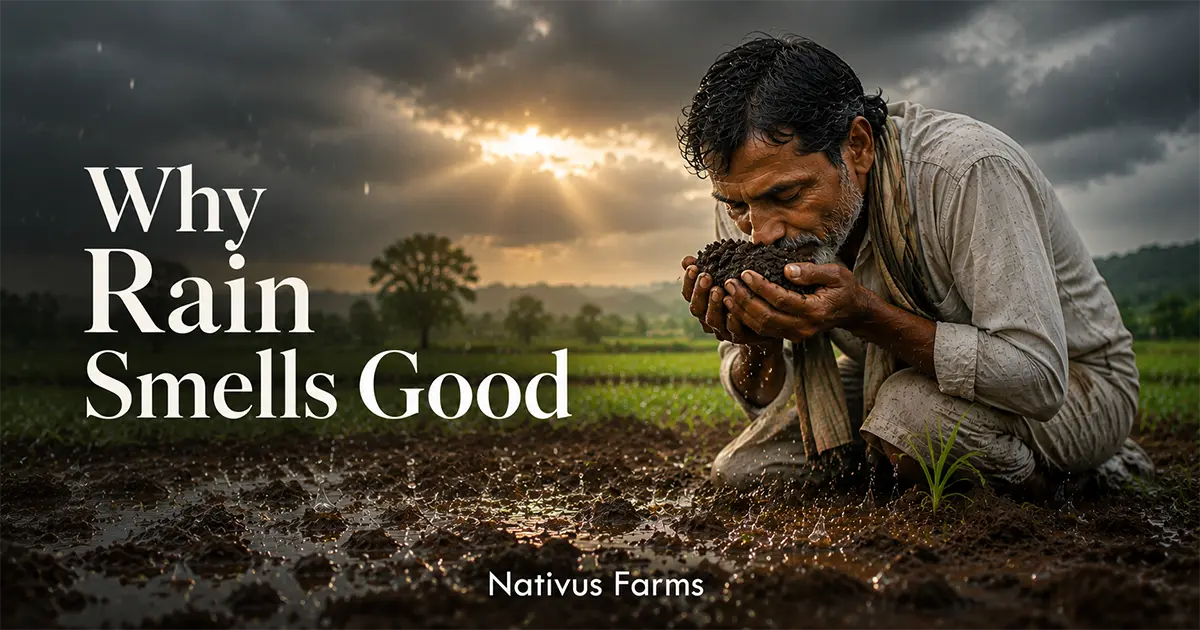
There is an undeniable magic to the arrival of the first rain after a long, parched season. You are sitting near an open window, feeling the heavy, expectant air, when the first heavy drops strike the warm, dry ground. Almost instantly, a rich, intoxicatingly sweet, earthy fragrance fills the air. It is a smell that feels ancient, comforting, and deeply satisfying all at once.
Have you ever stopped to wonder why a storm brewing over dry soil triggers such a profound sensory response? It turns out you are not just smelling water hitting dirt. You are experiencing a complex biochemical reaction born from living soil, plant biology, and atmospheric science. This beloved scent has a name, a fascinating origin story, and a vital link to the health of our planet.
What Is Petrichor? Decoding Nature’s Signature Fragrance
That unforgettable aroma after the first rain is called petrichor. While humans have cherished this smell for millennia, the term itself is surprisingly modern.
In 1964, two Australian researchers, Isabel Joy Bear and Richard Thomas, set out to uncover what caused the scent of dry earth after rain. They published their groundbreaking findings in the journal Nature, coining the word petrichor from two Greek roots: petra (meaning “stone”) and ichor (the golden fluid that flowed through the veins of the gods in Greek mythology).
Literally translated, petrichor means “the blood of the stone.”
Bear and Thomas discovered that petrichor is not a single element. Instead, it is a delicate mixture of natural organic compounds trapped within rocks and soil during periods of dry weather, waiting for a single splash of water to set them free.
The Chemical Recipe: What Makes Rain Smell So Earthy?
To truly understand petrichor, we have to zoom in on the soil surface. When the ground dries out, three primary biological ingredients accumulate:
1. Plant Oils
During extended dry spells, certain plants produce organic oils to signal a pause in growth and conserve valuable water. These volatile oils seep into the surrounding soil, coating rock particles and dry clay. When rain hits, these oils release into the atmosphere, contributing sweet, resinous notes to the rain fragrance.
2. Geosmin: The Scent of Living Earth
The real star of the show is an organic compound called geosmin (which translates to “earth smell”). Geosmin is a byproduct created by beneficial soil microorganisms, primarily actinobacteria like Streptomyces. These microscopic organisms thrive in healthy, moist dirt. As they break down organic matter, they produce geosmin.
When the soil dries out, the actinobacteria slow down, leaving high concentrations of geosmin stored inside the soil matrix.
3. Atmospheric Ozone
If you have ever smelled a sharp, clean fragrance just before a storm starts, you are smelling ozone. Lightning strikes high in the atmosphere split nitrogen and oxygen molecules, forming ozone. Downdrafts from the approaching storm push these molecules down to ground level, blending sharp ozone with earthy geosmin.
How Raindrops Release Petrichor Into the Air
Knowing what makes up petrichor is only half the story. How do compounds trapped deep inside dry dirt end up floating right into your nose?
The answer came in 2015, when scientists at the Massachusetts Institute of Technology (MIT) used high-speed cameras to observe raindrops hitting porous surfaces.
When a raindrop falls at the right speed onto dry, porous soil, it traps tiny pockets of air beneath it. These air bubbles rapidly rise through the water droplet, just like champagne bubbles popping at the surface.
As these bubbles burst, they shoot microscopic liquid sprays—called aerosols—high into the air. These tiny aerosols carry trapped plant oils, geosmin, and soil bacteria with them. The wind then sweeps these airborne particles across miles, bringing that heavenly scent straight to your porch.
How Raindrops Release Petrichor Into the Air
Understanding the ingredients is only half the puzzle when asking why the earth smells so good after rain. How do compounds trapped deep inside dry dirt end up floating straight into your nose?
In 2015, researchers at the Massachusetts Institute of Technology (MIT) used ultra-high-speed cameras to observe raindrops landing on porous surfaces. What they discovered transformed our understanding of soil physics.
When a raindrop hits dry soil at the right speed, it traps microscopic air bubbles underneath itself. These bubbles rapidly shoot upward through the droplet and pop at the surface—much like champagne bubbles releasing a fine mist.
As these bubbles burst, they launch tiny liquid sprays called aerosols high into the air. These airborne droplets carry trapped plant oils, geosmin, and soil microbes directly into the breeze, sweeping that signature fragrance across entire fields and neighborhoods.
The Physics of a Rain Drop
Did you know? A gentle, light rain shower on warm earth actually creates far more petrichor aerosols than a heavy downpour! Torrential rain falls too fast, washing away the delicate air bubbles before they can pop and release their fragrance into the breeze.
Why Are Humans So Obsessed With the Smell of Rain?
Humans possess an extraordinarily sensitive olfactory response to geosmin. Our noses can detect geosmin at concentrations as low as 5 parts per trillion. To put that in perspective, human noses are far more sensitive to geosmin than a shark is to a drop of blood in the ocean.
Why did we evolve such an acute sense for this specific compound?
Evolutionary scientists believe our ancestors relied heavily on the smell of geosmin for survival. In arid landscapes, detecting the scent of rain miles away meant finding fresh water, lush vegetation, and abundant game. Recognizing petrichor was a matter of life and death.
That deep, soothing comfort you feel when smelling petrichor is a genetic echo of survival—a hardwired reminder that life-giving water has arrived.
The Role of Healthy Soil: Why Living Dirt Smells Best
Not all rain smells equal. Have you ever noticed that rain falling on a concrete city street lacks the rich, soulful depth of rain falling over a pristine forest or an organic farm field?
That difference comes down to soil health.
Petrichor relies directly on a bustling microbial ecosystem. Rich, living soil is home to billions of active microorganisms per teaspoon. Soil that is full of organic matter, free from harsh chemical inputs, and rich in natural compost produces vastly higher levels of geosmin and beneficial compounds.
When soil is dead, compacted, or depleted by synthetic treatments, microbial populations plummet. Without a thriving population of Streptomyces and organic soil life, the soil loses its natural ability to create that deep, intoxicating petrichor scent.
At Nativus Farms, we view soil as a living, breathing organism rather than mere dirt. Nurturing living soil through regenerative methods does far more than produce nutrient-dense food—it preserves the natural biological cycles that make our earth smell and feel vibrant.
What the First Rain Means for Sustainable Farming
For traditional farming communities, the smell of the first rain has always meant one thing: hope.
Long before modern meteorology, farmers depended on their senses to read the seasons. The arrival of petrichor signaled that the long, dry sleep of the land was over. It marked the exact moment to prepare fields, turn compost, and sow seeds into the awakening soil.
In sustainable agriculture, the first rain triggers critical natural processes:
- Microbial Activation: Water instantly rehydrates dormant soil microbes, initiating nutrient cycling for young plants.
- Seed Germination: Moisture softens hard seed coats, telling wild plants and farm crops it is safe to sprout.
- Dust Suppression: Heavy raindrops wash accumulated dust off plant leaves, unlocking maximum photosynthesis.
- Thermal Regulation: Rain cools baking hot soil surfaces, protecting delicate plant root networks from heat stress.
Practicing regenerative soil care ensures that when these rains arrive, the land absorbs water like a sponge rather than letting it wash away valuable topsoil.
Cultural Connections: The Heritage of “Mitti ki Attar”
The human connection to petrichor goes beyond survival and agriculture—it is woven deeply into culture, art, and memory.
In India, the arrival of the monsoon is celebrated as a time of joy, relief, and renewal. For centuries, perfumers in the ancient city of Kannauj, Uttar Pradesh, have captured this exact moment in a bottle. They distil dry, baked clay tiles using traditional copper vessels to create Mitti ki Attar—the “perfume of the earth.”
This natural attar captures the essence of dry soil receiving its first drink of water. It is a testament to humanity’s timeless desire to carry the soothing scent of nature with us, wherever we go.
Preserving Living Soils for Future Generations
The smell of rain is a gentle reminder that the earth beneath our feet is intensely alive. Protecting petrichor means protecting the fragile microbial communities living in our soil.
Unhealthy soil practices, deforestation, excessive chemical runoff, and land degradation strip the soil of its organic identity. When we protect soil biodiversity, we ensure that:
- Farm ecosystems remain resilient against drought and climate shifts.
- Food crops retain rich, natural nutrient profiles.
- Water tables recharge naturally through porous, sponge-like earth.
- The natural scents, sights, and rhythms of our planet stay intact for our children.
Choosing food grown through conscious, regenerative methods is one of the most effective ways you can support healthy soil biology right from your kitchen.
Frequently Asked Questions
Q1: Why does rain smell different in the city compared to the countryside?
City rain often mixes with urban pollutants, asphalt oils, and concrete dust, resulting in a sharper, chemical scent. Rural rain falls on living soil, trees, and grass, releasing higher concentrations of pure geosmin and plant resins.
Q2: Is the smell of rain bad for your health?
No, the smell of petrichor is completely harmless and natural. However, right after a dry spell, high concentrations of fine dust particles disturbed by rain can briefly irritate sensitive airways in people with severe allergies or asthma.
Q3: Can scientists make synthetic petrichor?
Yes! Perfumers can synthesize geosmin and blend it with natural essential oils like oakmoss and patchouli to recreate the fragrance of wet earth. However, synthetic versions rarely capture the subtle depth of real rain hitting living soil.
Q4: Why does ozone smell sharp right before it rains?
Ozone is created when atmospheric electricity splits oxygen molecules into individual atoms, which then reform into $O_3$. Strong winds from an approaching thunderstorm push this clean, sharp-smelling gas down to ground level before the rain actually hits.
Conclusion: A Reminder of Earth’s Quiet Wonders
The familiar fragrance after the first rain is far more than a comforting sensory experience. It is a live biological status report—proof that the ground beneath our feet is vibrant, active, and bursting with invisible life.
Every time you take a deep breath after a summer storm, you are connecting with a natural process millions of years in the making. Let that rich, earthy aroma serve as a quiet reminder to honor, protect, and cherish the living soil that sustains us all.
Want to learn more about how living soil shapes our health, food, and environment? Explore our sustainable farming guides on the Nativus Farms blog and discover how working with nature transforms the way we live.