
Nature Decoded
Why Do Earthworms Come Out After Rain? The Hidden Story Beneath Your Feet.
Jul
Why Do Earthworms Come Out After Rain? The Hidden Story Beneath Your Feet
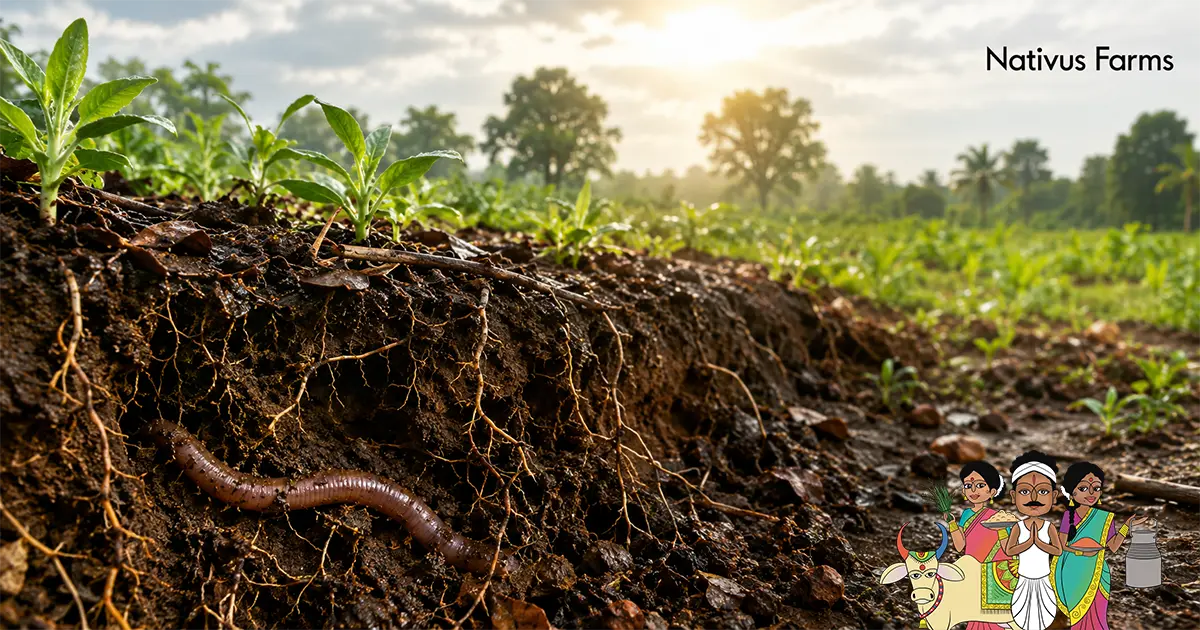
When monsoon clouds break over Indian cities, the concrete gives off that nostalgic, earthy scent—petrichor. Most of us pause to watch the rainfall from our balconies, tea cup in hand. But look down at the wet soil in a nearby garden or park pavement, and you will notice quiet movers emerging into the open air. Long, glistening, and unassuming: earthworms.
For generations, urban lore told us a simple story: these gentle creatures surface because their underground burrows overflow, leaving them to drown. But nature rarely writes such simple scripts.
The real reason why earthworms come out after rain is far more intriguing—a tale of survival, exploration, and an ancient relationship between the soil and the skies. To understand it, we must step past the pavement and explore the vibrant, hidden cosmos beneath our feet.
The Breath of the Earth: How Earthworms Move and Survive
To understand why an earthworm surfaces after a storm, you first need to understand how it breathes.
Unlike humans, earthworms do not possess lungs. They take in oxygen directly through their moist, permeable skin. For this delicate gas exchange to happen, their skin must remain lubricated. If an earthworm dries out under the hot sun, its breathing pores collapse, leading to suffocation.
       [ Raindrops Fall ]
               │
               ▼
   [ Soil Saturates with Water ]
               │
      ┌────────┴────────┐
      ▼                 ▼
[ Safe Surface ]   [ Cool Moisture ]
      │                 │
      └────────┬────────┘
               ▼
[ Earthworm Emerges to Explore & Mate ]
Under normal circumstances, the soil subterranean layers provide a perfectly regulated, dark, damp sanctuary. But a heavy downpour changes the subterranean climate instantly.
When rain thoroughly saturates the ground, the air pockets trapped between soil particles fill with water. While some delicate species do surface to avoid oxygen depletion in waterlogged burrows, for many common surface-dwelling species, rain is not a disaster—it is an invitation.
Beyond Drowning: The Scientific Reality of Surfacing
For decades, popular culture repeated the myth that earthworms surface purely to escape drowning. Modern soil ecology paints a much richer picture.
Many earthworm species can survive underwater for days if the water holds dissolved oxygen. So why leave the security of the soil at all?
1. Safer Surface Travel
Moving through compact soil requires immense physical effort. An earthworm must literally eat its way through or push aside heavy earth. On a dry day, venturing onto the surface means rapid dehydration and death.
A cool, rainy day creates a temporary bridge of moisture across the land. The damp atmosphere allows earthworms to travel across the surface quickly without drying out, enabling them to explore new territories in minutes—a journey that would take days underground.
2. Dispersal and Migration
Ecosystems thrive on movement. When populations in one area grow dense, resources become scarce. Rainy weather offers a safe, low-friction window for worms to migrate, colonize fresh soil, and expand their habitat footprint across fields and gardens.
3. Finding Mates
Earthworms are hermaphroditic, possessing both male and female reproductive organs, but they still require a partner to mate. Emerging onto a wet surface during or after rain drastically increases their chances of encountering another worm from a neighboring burrow.
The Invisible Engineers: Why Earthworms Matter
In traditional Indian rural wisdom, elders often referred to the earthworm as Bhoomi Putra—the Son of the Earth—or the farmer’s silent partner. Long before modern agronomy designed heavy tractors and synthetic fertilizers, these humble creatures managed the soil ecosystem naturally.
                 ┌───────────────────────────────┐
                 │       THE EARTHWORM CYCLE     │
                 └───────────────┬───────────────┘
                                 │
           ┌─────────────────────┴─────────────────────┐
           ▼                                           ▼
  [ Digs Burrows & Tunnels ]                 [ Consumes Organic Matter ]
           │                                           │
  ┌────────┴────────┐                         ┌────────┴────────┐
  ▼                 ▼                         ▼                 ▼
Percolates     Aerates Root               Produces Castings  Enriches
Water          Zones                      (Natural N-P-K)    Microbes
Natural Tilling and Aeration
As earthworms move, they digest decaying leaves and soil, carving out intricate networks of burrows. These tunnels break up compacted earth, creating channels for air to reach plant roots. This subterranean aeration allows roots to breath deeply and grow unobstructed.
Water Harvesting and Filtration
Earthworm tunnels act as natural drainage pipes. During heavy downpours, these channels allow water to sink deep into the ground rather than running off the surface and causing erosion. This improved water percolation slowly recharges underground aquifers while keeping topsoil intact.
Rich Castings: Nature’s Finest Fertilizer
What goes into an earthworm comes out infinitely better for the land. Earthworm excrement, known as castings, is a nutrient-dense organic fertilizer rich in plant-available nitrogen, phosphorus, potassium, calcium, and magnesium. Castings neutralise soil pH and balance microbial life, feeding plants far more effectively than synthetic alternatives.
The Hidden Cosmos Beneath Your Feet
When we look at a patch of farmland or a suburban lawn, we usually evaluate what grows above ground: the vibrant leaves, flowers, and fruit. But the health of the visible world depends entirely on the hidden ecosystem thriving underneath.
A single teaspoon of healthy, living soil contains more microorganisms than there are humans on Earth. Fungi weave delicate fungal networks (mycelium) that share nutrients between plant roots. Beneficial bacteria break down minerals. Insects, springtails, and mites recycle organic detritus.
+-----------------------------------------------------------------------+
|                       THE LIVING SOIL NETWORK                         |
+-----------------------------------------------------------------------+
|  [ Fallen Leaves & Debris ]                                           |
|               │                                                       |
|               ▼                                                       |
|       ( Earthworms )  <--->  [ Microbes & Bacteria ]                  |
|               │                                                       |
|               ▼                                                       |
|   [ Nutrient-Rich Castings ] <---> [ Mycelial / Fungi Networks ]      |
|                                                │                      |
|                                                ▼                      |
|                                       { Plant Root Systems }          |
+-----------------------------------------------------------------------+
Sitting near the top of this soil food web, earthworms serve as master integrators. They pull fallen leaf litter deep into their burrows, feeding microbes and accelerating decomposition. Without earthworms, this nutrient cycle stalls, causing organic matter to sit stranded on the surface while soil beneath turns stale and lifeless.
Living Soil vs. Chemical Dependancy
For decades, industrial agriculture treated soil as an inert medium—a plain canvas to hold plants upright while synthetic chemical fertilizers provided nutrients. Heavy tillage, combined with chemical pesticides and synthetic salts, severely disrupted soil biodiversity, turning living soil into lifeless dirt.
+--------------------------+------------------------------------+------------------------------------+
| Feature                  | Dead / Chemical-Treated Dirt       | Living Soil with Earthworms        |
+--------------------------+------------------------------------+------------------------------------+
| Soil Structure           | Compacted, hard, prone to erosion  | Porous, sponge-like, crumbly       |
| Water Retention          | Poor; causes heavy runoff          | High; absorbs rain like a sponge   |
| Earthworm Presence       | Absent or near-zero                | Abundant (hundreds per sq. meter)  |
| Nutrient Availability    | Dependent on synthetic inputs      | Self-sustaining organic cycle      |
+--------------------------+------------------------------------+------------------------------------+
At Nativus Farms, we uphold traditional ecological knowledge backed by modern agricultural science: You do not feed the plant; you feed the soil, and the soil feeds the plant.
When soil is rich with earthworms and healthy organic matter, crops grow resilient, naturally resisting pests and drought. Chemical dependence drops, and food grown in this living ecosystem regains its natural nutrient density and flavor.
Clearing the Air: Myths vs. Scientific Facts
Despite their immense ecological value, earthworms often fall victim to common urban misunderstandings. Let us clear up a few myths.
Myth 1: Earthworms come out after rain because they are drowning.
- Fact: While waterlogged soils prompt a few species to move, most earthworms surface because high humidity lets them move, explore, and find mates across the ground without dehydrating.
Myth 2: Earthworms eat and damage healthy crop roots.
- Fact: Earthworms feed on decaying plant material, fungi, and micro-organisms. They rarely touch healthy, living plant tissues. Instead, their burrows make it easier for plant roots to grow deep into the soil.
Myth 3: Earthworms are dirty garden pests.
- Fact: Earthworms are clean, essential soil engineers. Their presence is one of the clearest signs of a fertile, chemical-free ecosystem.
How to Welcome Earthworms Back to Your Garden or Farm
Whether managing a window box, a backyard garden, or a full farm, you can easily invite these natural soil builders back into your space.
                  ┌───────────────────────────────┐
                  │   BOOSTING SOIL EARTHWORMS    │
                  └───────────────┬───────────────┘
                                  │
    ┌─────────────────┬───────────┴───────────┬─────────────────┐
    ▼                 ▼                       ▼                 ▼
[ Add Organic ]   [ Apply Mulch ]     [ Stop Chemical ]   [ Minimize Tillage ]
  Compost           (Leaves/Straw)       Pesticides           (Protect Burrows)
- Feed the Soil with Organic Matter: Add compost, leaf mold, or well-aged manure regularly. Earthworms need organic debris to feed on and thrive.
- Keep the Ground Covered (Mulching): Bare soil dries out rapidly under the sun and forms a hard crust. Cover open beds with dry leaves, straw, or coconut coir to lock in moisture and regulate surface temperature.
- Eliminate Synthetic Chemicals: Chemical fertilizers, harsh weedkillers, and synthetic pesticides alter soil pH and can harm delicate earthworm skin. Shift to natural organic inputs like neem oil and bio-compost.
- Minimize Tillage: Frequent, heavy digging or rototilling destroys delicate subterranean burrows and disrupts earthworm egg capsules (cocoons). Embrace no-till or low-till practices wherever possible.
- Maintain Consistent Moisture: Water your plants deeply but infrequently to keep lower soil layers moist without waterlogging the surface.
Frequently Asked Questions
Q1: Do earthworms die if they stay out in the sun after rain?
Yes. Direct sunlight exposes earthworms to ultraviolet radiation, which damages their skin. Warm sun also evaporates their body moisture rapidly, preventing them from taking in oxygen and leading to dehydration.
Q2: Why do I find dead earthworms on concrete walkways after rain?
When earthworms travel over damp concrete during a night storm, they can get stranded when the sun comes up. Concrete warms quickly and loses moisture fast, trapping the worms far from soft soil before they can dig back under.
Q3: Are all earthworms in my garden the same species?
No. There are thousands of earthworm species globally, generally grouped into three main types:
- Epigeic (Surface dwellers): Compost lovers like red wigglers that live in surface debris.
- Endogeic (Sub-surface dwellers): Species that burrow horizontally through topsoil.
- Anecic (Deep burrowers): Large worms that build deep vertical tunnels into the subsoil.
Q4: Can I buy earthworms to instantly fix my garden soil?
Adding earthworms helps, but they will not survive if the environment is inhospitable. You must first create a welcoming home by adding organic compost, maintaining moisture, and eliminating chemical inputs.
Conclusion: Looking Down to See the Big Picture
The next time dark monsoon clouds sweep across the sky and gentle rain washes over your neighborhood, take a quiet moment to step outside. As wet earth fills the air with petrichor, look down at the ground beneath your feet.
That small earthworm gliding across damp soil is not lost, broken, or drowning. It is taking advantage of a brief, beautiful window provided by nature to explore, connect, and renew its world.
It serves as a quiet reminder from nature: beneath our paved roads and concrete towers lies an active, living world working non-stop to sustain life on Earth. When we honor, protect, and rebuild this hidden ecosystem, we take an important step toward a healthier, more sustainable planet.
Enjoyed this article? Nativus Farms is dedicated to bringing you closer to the origins of your food through natural living, living soils, and regenerative agriculture. Explore our Nature Decoded series for more stories from the living earth.