
Nature Decoded
Tholi Ekadashi and the Monsoon Farming Season: India’s Ancient Agricultural Calendar
Jul
Tholi Ekadashi and the Monsoon Farming Season: India’s Ancient Agricultural Calendar
When you hear about traditional Indian festivals, your mind likely jumps to colourful rituals, temples, and ancient mythology. But if you strip away the religious layers of many rural celebrations, a fascinating pattern emerges. These dates were rarely random. Instead, they served as survival markers, ecological reminders, and agricultural cues finely tuned to nature’s precise timing.
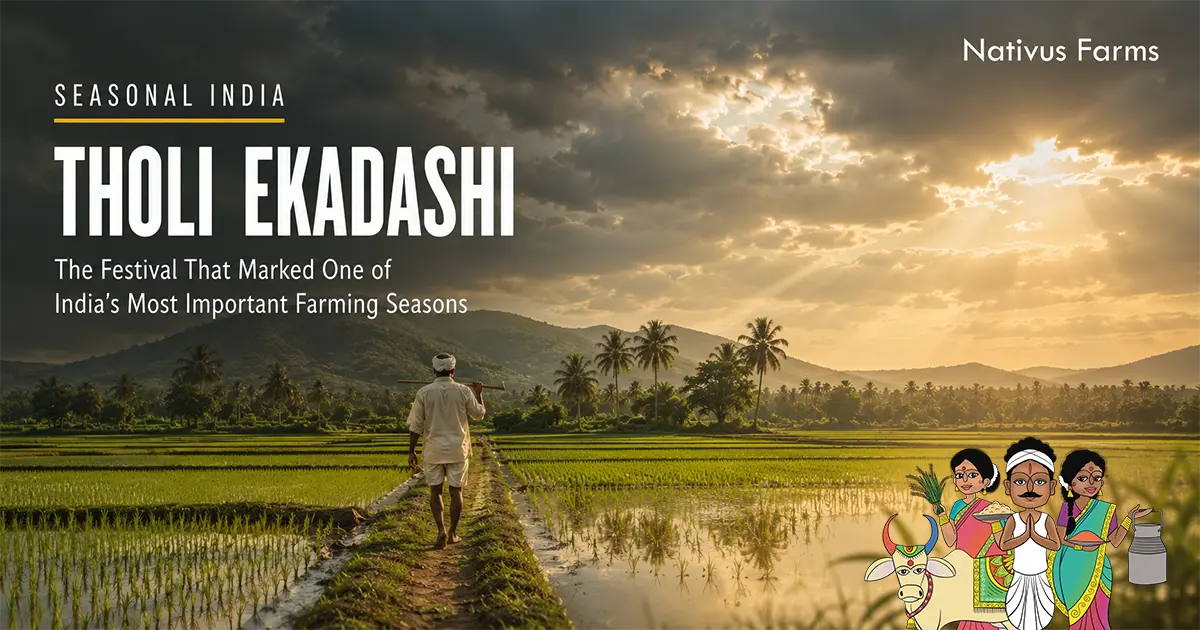
Tholi Ekadashi is perhaps one of the most brilliant examples of this seasonal alignment. Falling early in the monsoon season, this day historically signalled a monumental shift across rural India: the moment when waiting for the rain ended and intense cultivation officially began.
The Southwest Monsoon Arrives: Setting the Seasonal Clock
To understand why Tholi Ekadashi mattered so much to farming families, you have to look at the sky and the dirt. The festival usually arrives during Ashadha Shukla Ekadashi (roughly mid-June to early July). By this point in the year, the southwest monsoon is no longer a promise—it has arrived.
+-----------------------------------------------------------------------+
|                       THE MONSOON TRANSITION                          |
|                                                                       |
|   Early June                 Late June / Early July (Tholi Ekadashi)  |
|   - Parched, hard soil       - Soil fully saturated with moisture     |
|   - Dry irrigation tanks     - Village tanks filling rapidly          |
|   - Plowing dry land         - Active paddy seedling transplantation  |
|   - Waiting for rain         - Heavy community field work begins      |
+-----------------------------------------------------------------------+
The first aggressive downpours of early June break the harsh summer heat, soaking into parched fields that have sat empty for months. By the time Tholi Ekadashi arrives, the soil profile has absorbed enough moisture to sustain life.
Dry crust gives way to rich, workable earth. Dry stream beds and village irrigation tanks begin to collect runoff. The land transitions from surviving drought to fueling growth.
From Nursery to Mud: Paddy Transplantation Takes Center Stage
For villages across southern and central India, this milestone meant one primary thing: it was time to move paddy.
Weeks before the festival, farmers sow rice seeds in small, dense nursery beds. As monsoon rains stabilize around late June, these seedlings grow into bright green shoots ready for the open field.
[Nursery Sowing] ──(Early Rains)──> [Soil Saturation] ──(Tholi Ekadashi)──> [Field Transplantation]
Transplanting rice seedling shoots by hand into muddy, water-logged fields is backbreaking, continuous work. It requires entire communities to step out into the rain together.
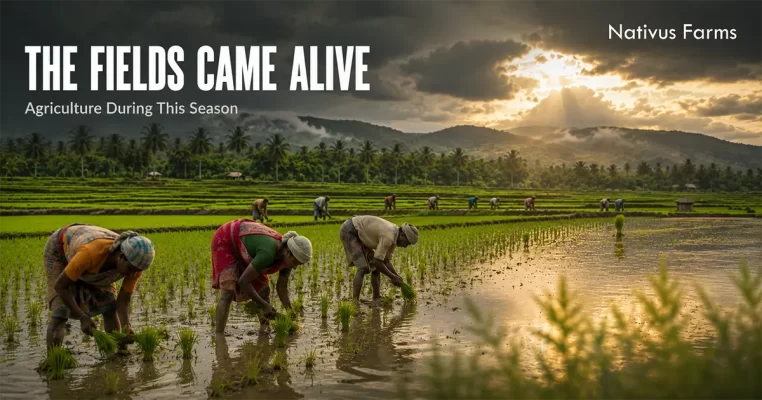
Tholi Ekadashi served as a shared community calendar event. It reminded everyone that the windows for optimal soil moisture were open, nurseries were mature, and delay meant risking the entire season’s yield.
Living Machines: The Role of Bullocks and Traditional Tools
Long before diesel tractors crossed rural landscapes, the heavy engine of Indian agriculture was the humble bullock working alongside hand-forged tools.
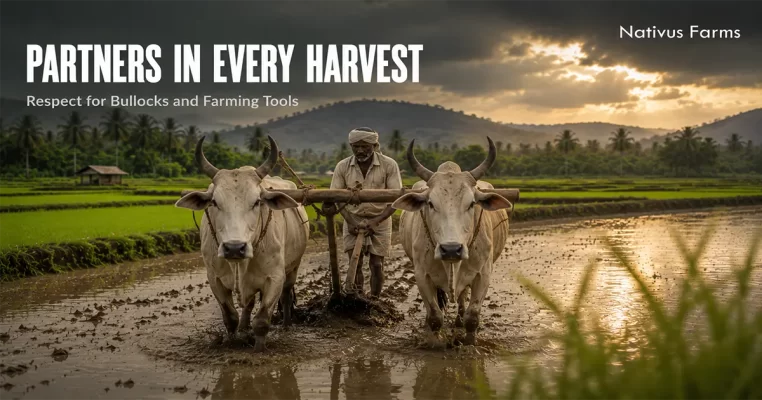
During the wet weeks surrounding Tholi Ekadashi, these draft animals worked long hours. They pulled wooden plows through thick mud, puddled wet fields to trap water, and hauled heavy seed bags across flooded paths.
+-----------------------------------------------------------------------+
|                      ESSENTIAL FARMING PARTNERS                       |
+--------------------------+--------------------------------------------+
| Component                | Agricultural Purpose                       |
+--------------------------+--------------------------------------------+
| Draft Bullocks           | Field puddling, heavy plow transport       |
| Wooden Plows             | Soil aeration and wet mud turning          |
| Iron Sickles & Hoes      | Nursery harvesting and bund maintenance    |
| Hand-woven Baskets       | Seedling transportation to flooded fields  |
+--------------------------+--------------------------------------------+
Farming communities held deep respect for their animals and wooden implements. This respect was grounded in direct, practical gratitude. Without healthy animals and working tools during this short planting window, a family could lose an entire year’s food supply.
Seasonal Food Systems: Nourishment for Long Working Days
As physical labor peaked in rain-soaked fields, daily household routines adapted quickly. Long hours in cold water and mud required simple, quick energy that didn’t demand hours of cooking over wet firewood.
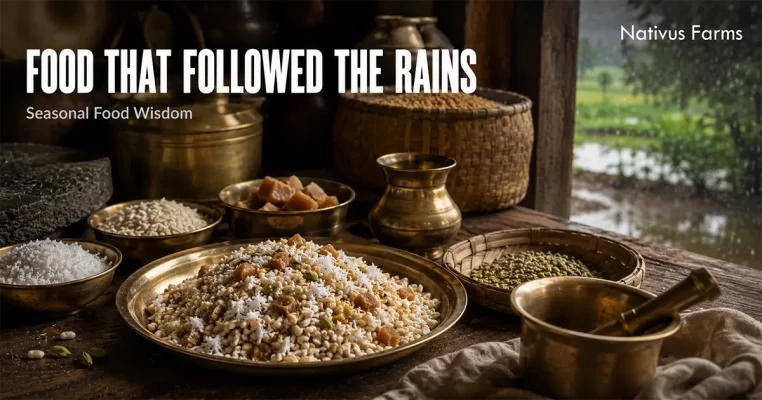
This environmental need birthed seasonal foods like Pelala Pindi—a simple, nutrient-dense mix made from puffed grains, jaggery, grated coconut, and warming spices like cardamom.
+-----------------------------------------------------------------------+
|                      PELALA PINDI: SEASONAL DESIGN                    |
+-------------------------+---------------------------------------------+
| Feature                 | Practical Agricultural Value                |
+-------------------------+---------------------------------------------+
| Puffed Grains           | Zero-cook energy source; shelf-stable       |
| Raw Jaggery             | Quick calorie intake for long field shifts  |
| Crushed Cardamom        | Digestive support during humid weather      |
| Dry Coconut             | Healthy fats for sustained physical endurance|
+-------------------------+---------------------------------------------+
Instead of viewing these dishes through a modern health-craze lens, we can appreciate them for what they truly were: brilliant culinary design. They relied on local ingredients that stored well in humid weather, provided instant energy for field workers, and eliminated the need to maintain open fires during heavy downpours.
Chaturmas and Rural Resilience: How Rains Reconstructed Community
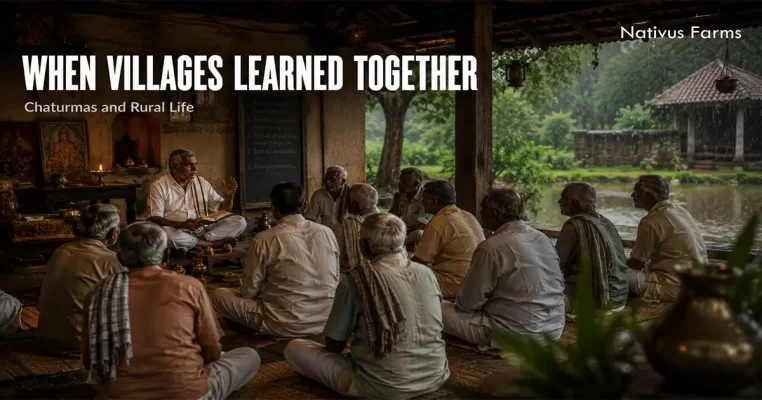
Tholi Ekadashi also marks the official start of Chaturmas—a four-month period stretching through the core of the monsoon season. Traditionally, long-distance travel came to a halt during these months.
Raging rivers, washed-out dirt roads, and dense forest paths made transit dangerous. As travel slowed down naturally, village life turned inward, fostering deep local resilience.
                      +----------------------------+
                      |   SW Monsoon Heavy Rains   |
                      +-------------+--------------+
                                    |
                                    v
                      +----------------------------+
                      | Long-Distance Travel Stops |
                      +-------------+--------------+
                                    |
                                    v
                      +----------------------------+
                      |  Villages Turn Inward      |
                      +-------------+--------------+
                                    |
         +--------------------------+--------------------------+
         |                          |                          |
         v                          v                          v
+------------------+       +------------------+       +------------------+
| Seed Preservation|       | Tool Repair Work |       | Knowledge Transfer|
+------------------+       +------------------+       +------------------+
When travel paused, communities focused on localized self-reliance:
- Seed Preservation: Exchanging and testing resilient crop varieties across neighboring farms.
- Tool Maintenance: Repairing iron sickles, wooden plows, and water channels between rainstorms.
- Knowledge Sharing: Older farmers passing down weather observations and planting wisdom to younger generations during evening rest periods.
This seasonal pause transformed villages into tight-knit, self-sustaining ecosystems capable of handling environmental challenges together.
Rediscovering Nature’s Rhythm in Modern Agriculture
Looking back at traditions like Tholi Ekadashi reveals a sophisticated understanding of ecology that modern society often overlooks. The historical calendar wasn’t separated from nature; it was driven by soil health, rain patterns, and seasonal biology.
As we face unpredictable climate patterns today, revisiting this traditional ecological knowledge offers valuable insights. Respecting nature’s timing, working with local water cycles, and preserving regional food systems remain the foundation of truly sustainable living.
Frequently Asked Questions
Q1: What is the primary agricultural significance of Tholi Ekadashi?
Tholi Ekadashi traditionally marks the stabilization of the southwest monsoon across India. It signaled to farming communities that soil moisture levels were ideal for transplanting young paddy seedlings into wet fields.
Q2: How did seasonal foods like Pelala Pindi support farmers?
Pelala Pindi was designed for monsoon farming conditions. Made from puffed grains, jaggery, and spices, it required no cooking fires, stored well in high humidity, and gave farm workers quick energy during long days in rain-soaked fields.
Q3: Why was long-distance travel avoided during Chaturmas?
Before modern asphalt roads and bridges existed, monsoon rains flooded rivers, washed out forest tracks, and created hazardous travel conditions. Pausing travel allowed communities to focus fully on local cultivation and tool maintenance.
Q4: Why were draft animals so central to this festival season?
Bullocks provided the heavy mechanical power needed to plow, puddle, and prepare water-filled fields for paddy transplantation. Their work was essential for farm survival before modern machinery existed.
Conclusion: Reconnecting With Seasonal Wisdom
Tholi Ekadashi reminds us that human traditions were once closely tuned to the rhythms of the earth. By honoring the soil, celebrating the arrival of the rains, and working alongside nature, our ancestors built a sustainable way of life that endured for generations.
As we look toward the future of food, agriculture, and natural living, learning from these seasonal milestones can help us build a more conscious connection to the land beneath our feet. Take time this season to notice the subtle shifts in your local environment, support sustainable local farmers, and celebrate the natural cycles that nourish us all.