
Sustainable Agriculture
Earthworm Castings: The Ultimate Secret to Restoring Indian Soil Health
Jun
The Gold in Your Soil: Why Earthworm Castings Are the Secret to Climate-Resilient Indian Farming
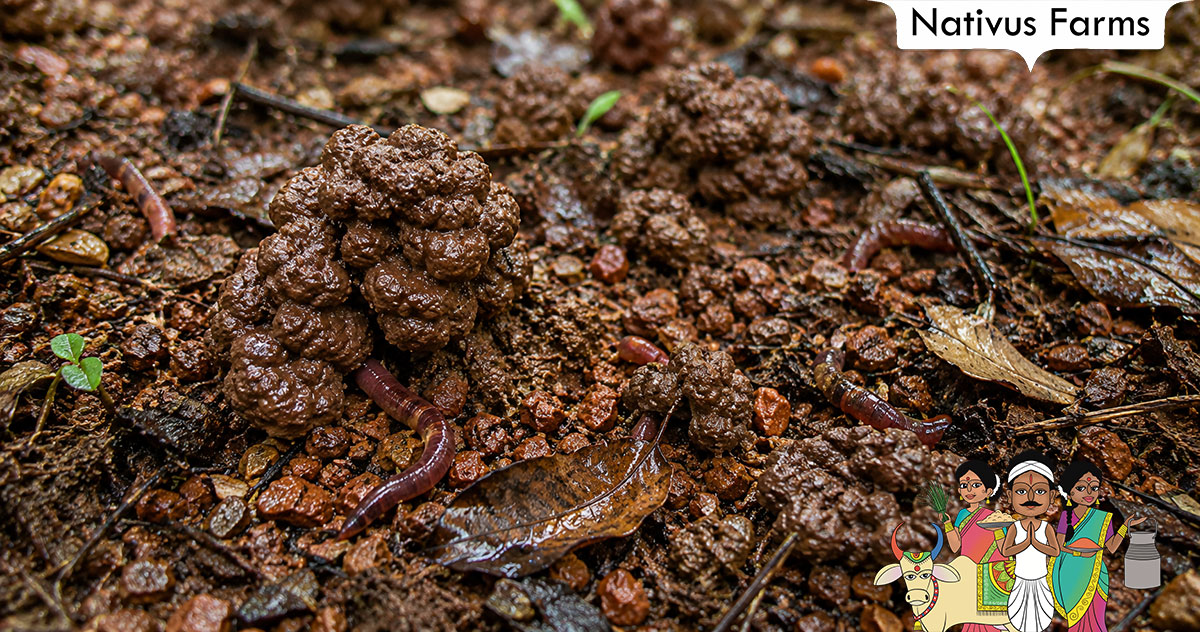
Walk through your fields a day after the first monsoon showers, and you will likely notice tiny, bumpy mounds of soil scattered across the ground. To the untrained eye, they look like ordinary mud bubbles. But to an experienced organic farmer, these little structures are pure biological gold.
These mounds are earthworm castings, the nutrient-rich digested soil excreted by nature’s finest subterranean engineers.
For generations, traditional Indian agriculture thrived on the back of vibrant soil biology. However, decades of excessive chemical farming have left large tracts of our land compacted, thirsty, and biologically dead. Understanding and nurturing earthworm castings is not just an old-school farming practice—it is the cornerstone of modern regenerative agriculture.
Let us dive deep into the science of worm castings and explore how they can revitalize Indian farmlands.
1. What Are Earthworm Castings?
Put simply, earthworm castings are the end product of organic matter decomposition by earthworms. As earthworms tunnel through the earth, they consume organic debris, dead plant roots, microbes, and mineral soil particles.
Inside the worm’s digestive tract, this mixture undergoes an incredible transformation. It is ground down, mixed with beneficial enzymes, and coated with protective mucus before being excreted.
Worm Castings vs. Ordinary Soil
Ordinary soil is often just a mix of sand, silt, clay, and unrefined organic matter. Worm castings in soil, on the other hand, represent highly concentrated, biologically active humus. Consequently, they are structurally stable, rich in plant-available nutrients, and teeming with billions of beneficial microorganisms that ordinary soil lacks.
Ordinary Soil  ---> Consumed by Earthworm ---> Bio-Enzymatic Shift ---> Living Worm Casting
(Raw Minerals)       (Digestion & Mucus)       (Microbe Explosion)     (Plant-Ready Gold)
The Magic of the Monsoon
During the hot, dry summer months, earthworms burrow deep into the subsoil to escape the heat, entering a state of dormancy. However, when the monsoon hits, the water fills their deep burrows, forcing them to move upward for oxygen.
This climate shift triggers intense earthworm activity in farmland. As they feed heavily on the surface organic matter, they leave behind highly visible surface castings. Furthermore, while some species produce subsurface castings within their tunnels, surface castings are clear living soil indicators that your land is waking up.
2. Living Soil vs. Dead Soil: Why Castings Matter
In industrial agriculture, soil is often treated as an empty cup used to hold chemical fertilizers. Unfortunately, this heavy chemical approach leads to “dead soil”—a lifeless medium that hardens like concrete under the Indian sun.
Conversely, regenerative agriculture treats soil as a living ecosystem. For this reason, earthworms are the ultimate indicator of your land’s true vitality.
The Subterranean Network
When earthworms deposit castings, they do not just dump nutrients. In addition, they create localized microbial hotspots. Therefore, the mucus in the castings acts as a brilliant breeding ground for vital life.
Specifically, this biological activity includes:
- Beneficial bacteria that fix atmospheric nitrogen.
- Mycorrhizal fungi that stretch out like tiny nets to feed plant roots.
- Actinomycetes, which actively help plants fight off soil-borne diseases.
Monitoring Biological Signs
During your morning field walks, counting these structures is the simplest way of measuring soil health naturally. Therefore, if your soil has plenty of castings, it means your underground workforce is working 24/7 to keep your farm fertile.
3. The Nutrient Punch of Earthworm Castings
Chemical fertilizers give plants a sudden, aggressive spike of nutrients, much of which washes away during heavy rains. On the other hand, earthworm castings offer a beautifully balanced, slow-release buffet of natural plant nutrients.
+------------------------+-------------------------------------------------------------+
| Nutrient Component     | Agricultural Benefit for Crops                              |
+------------------------+-------------------------------------------------------------+
| Available Nitrogen (N) | Readily absorbed for lush, green vegetative leaf growth.    |
| Soluble Phosphorus (P) | Modified by worm enzymes for quick root development.        |
| Exchangeable Potassium | Boosts disease resistance and improves fruit size/quality.  |
| Micronutrients         | Loaded with essential Zinc, Iron, Manganese, and Boron.     |
+------------------------+-------------------------------------------------------------+
Because these nutrients are bound within a organic mucus matrix, they do not leach out of the soil easily. Instead, they break down slowly, feeding your crops consistently throughout their growth cycle.
4. Fixing Soil Structure from the Inside Out
India’s varied topographies present unique soil challenges. The sticky black cotton soils of Central India compact easily, while the red soils of the South often struggle to hold nutrients. Earthworms offer a natural solution to reduce soil compaction naturally.
How Soil Aggregation Works
The process of earthworms and soil aggregation is pure physics and biology. The mucus in worm castings glues tiny soil particles together into stable crumbs called aggregates. These aggregates do not break down easily under heavy rain or wind.
- In heavy clay/black soils: Castings break up the sticky mass, creating open channels for better aeration and root penetration.
- In sandy/degraded soils: Castings add body and structure, preventing the soil from blowing away during dry seasons.
5. Monsoon Insurance: Water Retention Benefits
With climate change bringing erratic weather patterns across India, managing water is a matter of survival for farmers. This is where water retention in soil becomes critical, especially for rainfed agriculture India depends upon.
Did You Know? A soil rich in earthworm castings can hold up to nine times its weight in water.
Sponges in the Root Zone
The stable aggregates created by castings act like microscopic sponges. During heavy monsoon downpours, instead of water washing over the surface and causing erosion, it infiltrates deep into the earthworm tunnels.
Consequently, this moisture is trapped in the root zone, creating incredible drought resilience. When dry spells hit between monsoon segments, crops grown in casting-rich soils remain green and vibrant far longer than crops in compacted fields.
6. The Ultimate Crop Productivity Boost
Healthy soil directly translates to profitable farming. Indeed, when your fields are rich in earthworm castings, your crops experience a holistic upgrade in health.
       [Abundant Earthworm Castings]
                    │
                    ▼
       [Deep, Well-Aerated Root Systems]
                    │
                    ▼
  [Efficient Nutrient & Water Uptake]
                    │
                    ▼
[Resilient Crops + Higher Yields Naturally]
Crop-Specific Impact
- Vegetables (Tomato, Chilli, Onion): Faster seed germination, reduced transplant shock, and better fruit set.
- Millets & Pulses: Enhanced drought tolerance and stronger root nodules for nitrogen fixation.
- Fruit Orchards (Mango, Pomegranate, Citrus): Improved soil biology around the root zone, leading to sweeter fruits and longer shelf life.
7. How to Invite Earthworms Back to Your Farm
Fortunately, you do not need to buy expensive external inputs to enjoy the benefits of earthworms. If you build the right environment, they will return naturally. Consequently, here are time-tested regenerative farming practices to boost your earthworm population.
Give Them a Blanket (Mulching)
Because earthworms hate heat and bare soil, keeping fields covered is essential. You can protect them by covering your fields with crop residues, straw, or live cover crops. This practice keeps the soil cool, retains moisture, and provides a continuous food supply for the worms.
Safeguarding Underground Habitats
Deep rotavator tilling destroys earthworm burrows and kills the worms directly. Therefore, moving toward minimal tillage or zero-tillage systems is critical to leave their underground homes intact. As a result, the existing underground population can multiply naturally without disruption.
Eliminating Harsh Agrochemicals
Synthetic pesticides, chemical weedicides, and high-dose chemical fertilizers create an acidic, toxic environment for soil biology. Transitioning toward natural farming inputs like Jeevamrutha, Ghana Jeevamrutha, Panchagavya, and well-decomposed farmyard manure acts as a massive magnet for earthworms.
8. Common Myths About Worm Castings
- Myth 1: Earthworm castings are the exact same thing as vermicompost. Vermicompost is a commercial organic fertilizer made by forcing specific compost worms (like Red Wigglers) to break down organic waste in bins. True earthworm castings are pure worm manure deposited directly into your farmland’s soil profile by native, deep-burrowing earthworm species. Both are excellent, but field castings represent a fully functional soil ecosystem.
- Myth 2: Earthworm mounds damage plant roots. Not at all. Earthworms never eat live, healthy plant roots. They only feed on decaying organic matter and the microbes coating it. Their tunnels actually make it easier for roots to grow deeper.
- Myth 3: Seeing castings indicates a pest infestation. This is a dangerous misunderstanding. Castings are a premium sign of soil health, not a disease. They indicate that your soil is alive and working for you.
Frequently Asked Questions
Q1: What are worm castings exactly, and are they safe for all crops? Earthworm castings are the nutrient-rich digested soil excreted by earthworms. They are 100% natural, non-toxic, and perfectly safe for every single crop type, from delicate leafy greens to large fruit orchards. Furthermore, unlike chemical fertilizers, they will never burn plant roots.
Q2: How can I tell the difference between worm castings and normal soil piles? Worm castings look like small clusters of tiny, uniform mud beads or miniature towers. In terms of color, they are typically darker than the surrounding soil. This variance happens because they have a much higher concentration of organic matter and humus.
Q3: My soil has zero earthworms. How long does it take to bring them back? If you stop heavy chemical usage and keep the soil covered with organic mulch, native earthworms will begin returning within a single monsoon cycle. However, maintaining consistent soil moisture is vital. Ultimately, soil biology is incredibly resilient when given a fair chance.
Q4: Do earthworm castings help crops survive during drought periods? Yes! The aggregates in earthworm castings hold substantial amounts of water, acting like micro-sponges in the root zone. Combined with the deep tunnels created by the worms, they significantly improve water infiltration and drought resilience in rainfed agriculture.
Conclusion
At Nativus Farms, we believe that true agricultural sustainability starts from the ground up. We cannot feed a growing nation with dying soil, nor can we outsmart the complex biological systems that have kept our planet fertile for millennia. Shifting our focus from feeding the plant directly to nurturing the soil ecosystem allows nature’s engineers to do what they do best.
Observing earthworm castings on your land is undisputed proof that regenerative farming works. It is a visible sign that your soil is transforming from a simple growing medium into a thriving, climate-resilient, and self-sustaining ecosystem. By adopting practices that protect and welcome these silent partners, Indian farmers can secure healthier crops, reduce expensive input costs, and protect our lands for generations to come.