
Sustainable Living
Living with the Rains: How Shravana and Rural Life Flow Together
Aug
Living with the Rains: How Shravana and Rural Life Flow Together
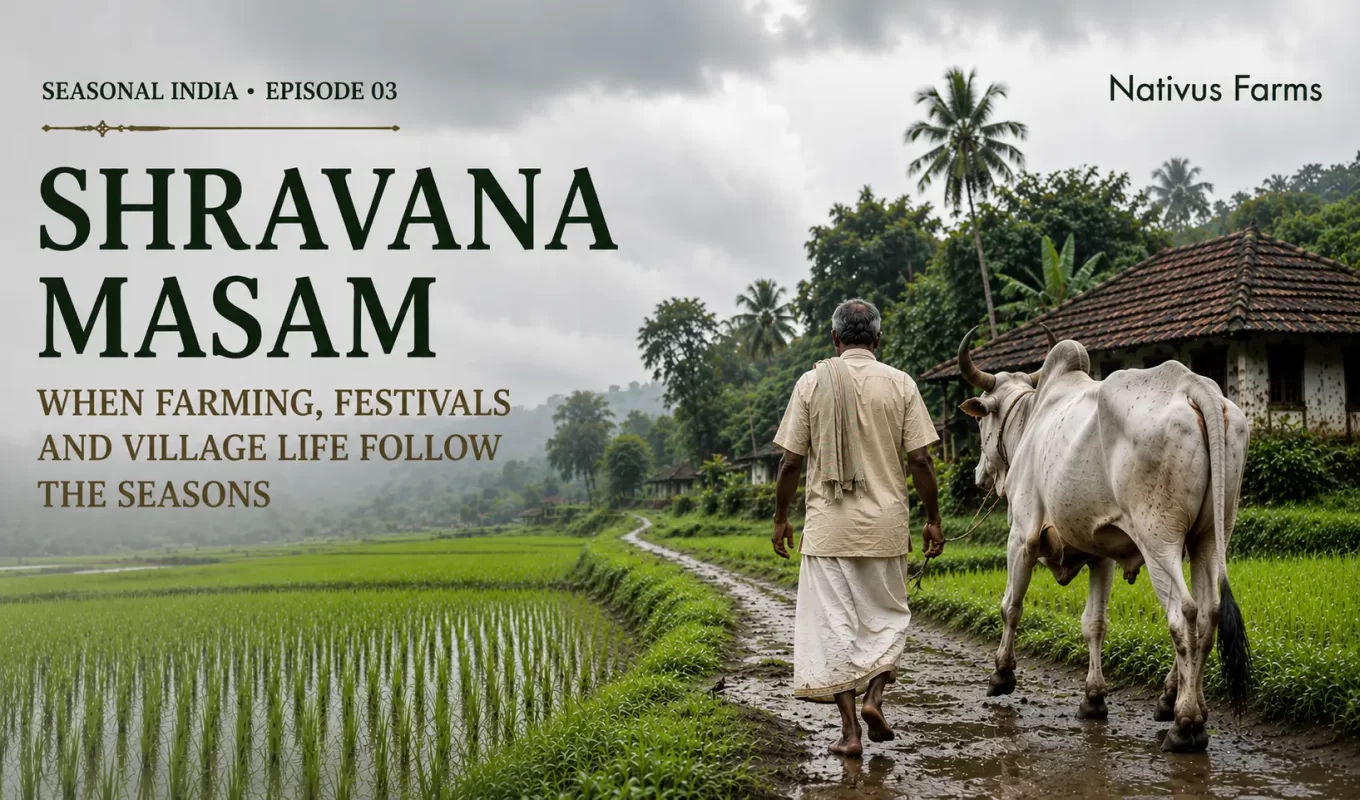
Have you ever noticed how a gentle monsoon downpour completely transforms the landscape around us? Across India, Shravan monsoon farming traditions reflect a time when the dry earth turns deep red-brown, dormant seeds burst open, and rural life wakes up. Modern calendars mark this period through dates and events, but for generations in the countryside, this season was never just a month to read off a page—it was a rhythm people lived every day.
In the countryside, the arrival of rain reshapes everyday existence. The monsoon brings green fields, bustling farm work, and a natural cycle where land, animals, and people move together.
Shravan Monsoon Farming Traditions Across Rural India
When the monsoon clouds gather, life in the village takes on a purposeful pace. Rain pours into dry ponds, village paths soften underfoot, and the surrounding hills wrap themselves in fresh green foliage.
During Shravana, paddy and seasonal crops start their growth. As a result, farmers spend long hours out in the open tending to young plants and clearing weeds.
Consequently, the relationship between the season and village life moves through a very simple chain of events:
- monsoon rain fills the landscape
- fields turn green with fresh shoots
- field work picks up momentum
- farm animals work alongside their owners
- village customs naturally adapt to the weather
- seasonal celebrations emerge organically
This flow shows how celebrations in rural India often grew alongside daily labor rather than away from it.
Seeds and Sprouts: Harela in Uttarakhand
Up in the quiet valleys of Uttarakhand, the tradition of Harela provides a clear window into this connection. Celebrated around the arrival of the rains, Harela literally means “Day of Green.”
First, days before the festival, families plant multiple types of seeds in small pots kept indoors. By the day of Harela, these seeds sprout into tender green shoots. Families carefully harvest these shoots, offer them as blessings, and place them behind ears or keep them in homes.
Ultimately, Harela is not a complex event; it is a gentle gesture. The green shoots reflect the community’s hope for strong crops in the months ahead. It shows how a simple act of watching seeds grow became a cherished family tradition.
Grounded in the Soil: Hareli of Chhattisgarh
Similarly, further south in the plains of Chhattisgarh, the festival of Hareli marks a deep connection to the earth during Shravana. Here, the focus shifts directly to the tools and spaces that make farm work possible.
On Hareli, farmers clean their ploughs, spades, and field equipment. In addition, farmers set aside, wash, and honor the tools that dig the soil every day.
Working Animals and Cattle Traditions in Farming
Families also pay special attention to their livestock, offering them fresh green pasture and homemade treats.
Hareli reminds us that everyday objects hold deep value. When survival depends on a sturdy plough and healthy soil, taking a day to care for those tools becomes second nature.
Honoring Working Animals: Bail Pola in Maharashtra
In traditional farming, cattle were essential partners in the field. For instance, bulls and oxen tilled the wet earth, hauled heavy loads, and helped feed entire communities. This shared effort built a bond between farmers and their animals.
Meanwhile, in Maharashtra, this bond is highlighted during Bail Pola, observed on Shravana Amavasya.
- Rest Day: Farmers give working bullocks a complete break from field labor.
- Grooming: Animals are bathed thoroughly in local rivers or ponds.
- Decoration: Their horns are painted, and their necks are adorned with bells and flower garlands.
- Special Treats: Families prepare traditional dishes like puran poli to feed their cattle.
Bail Pola is a regional tradition that highlights local farm life. It shows how deep gratitude for domestic animals found a permanent place in seasonal village life.
Diverse Traditions Across Landscapes
It is important to remember that India’s relationship with Shravana is diverse. Shravana is not universally an “agricultural month” in every single region, nor did every tradition originate in field work.
In contrast, along coastal belts, Shravana traditions focus heavily on the sea. Fishing communities pay close attention to changing ocean currents and monsoon winds, marking the end of the rough monsoon sea period with their own distinct customs. In urban centers, Shravana is often observed through quiet fasting or quiet family gatherings that have little to do with farming.
The broader story is about adaptation. People observed the world around them—the clouds, the rising rivers, the sprouting seeds, and the behavior of animals—and shaped their daily lives to fit that environment.
Connecting Back to Nature’s Cycle
Indeed, at Nativus Farms, we hold deep respect for this seasonal rhythm. True sustainability begins when we align our lives with nature rather than fighting against it. Protecting soil health, conserving water, and honoring the natural life cycles of plants and animals are not new ideas. They are practices rooted in rural heritage.
Overall, when we look back at traditions like Harela or Bail Pola, we see a lifestyle built on balance and care. Caring for the earth ensures that the earth continues to care for us.
Frequently Asked Questions
No. While Shravana coincides with the monsoon and peak farming activity in many rural regions, its traditions vary widely. Some regions celebrate family bonds, others focus on sea life, and many observe it purely through spiritual practices independent of agriculture.
Harela focuses on greenery, fresh life, and seasonal growth. By sprouting seeds indoors, families mark the arrival of the monsoon rains and share hopes for a healthy, prosperous harvest season.
Bail Pola acknowledges the essential role working animals play in traditional agriculture. By giving cattle rest, special care, and nourishment, the tradition highlights a balanced, respectful relationship between humans and animals.
Nativus Farms focuses on natural farming, earth-conscious soil management, and working alongside seasonal cycles. By respecting the natural environment, we help preserve healthy land and produce clean, honest food.
Conclusion
A season was once something people did not merely observe on a digital calendar—they lived through every drop of rain and every change in the wind. Shravana serves as a clear window into that older, balanced way of living. It reminds us of a time when rains, fields, working animals, and human communities moved together in one steady, natural harmony. By remembering these connections, we can bring a little more respect, balance, and care into our modern lives today.